Pickup Order Form
“`html
Pickup Order Form: Streamlining Your Shopping Experience
In today’s fast-paced world, convenience is king. The ability to order items online and pick them up in-store, bypassing shipping fees and lengthy delivery times, has become increasingly popular. This pickup, or “click and collect,” option relies heavily on a well-designed and user-friendly pickup order form. This form is the critical bridge between the customer’s online order and the store’s efficient fulfillment process.
Key Components of an Effective Pickup Order Form
A successful pickup order form goes beyond simply collecting basic information. It must be intuitive, secure, and capable of capturing all the details necessary for a smooth and accurate pickup. Here’s a breakdown of essential elements:
1. Customer Information:
- Full Name: A mandatory field to identify the customer placing the order. Include fields for both first and last name to ensure accurate record-keeping.
- Email Address: Crucial for sending order confirmations, pickup notifications, and any important updates regarding the order status. Ensure this field validates the email format.
- Phone Number: Essential for contacting the customer in case of any issues with the order, such as item unavailability or changes in pickup hours.
- Order Number: A unique identifier automatically generated upon order submission. This number should be prominently displayed in the order confirmation email and on the pickup form for easy reference.
2. Order Details:
- Order Summary: A clear and concise list of all items ordered, including quantities, sizes, and any other relevant specifications. This allows the customer to verify the accuracy of their order.
- Order Total: The final amount due, including taxes and any applicable discounts. This should be clearly displayed and easy to locate.
- Payment Information (if applicable): If payment isn’t processed online, the form might include options for paying at pickup (e.g., cash, credit card). In that case, clearly state the accepted payment methods.
3. Pickup Information:
- Preferred Pickup Date and Time: This is a crucial element of the pickup order form. Offer a range of available dates and time slots to allow customers to choose a convenient pickup window. Consider using a calendar interface for easy selection. Limit time slot sizes to manage order flow.
- Pickup Location: If the store has multiple locations, clearly display the address and contact information for the chosen pickup location. A map integration can be helpful.
- Pickup Instructions: Provide clear and concise instructions on where to go to pick up the order. This might include specific entrances, designated parking areas, or specific counter numbers. Consider including a photo or diagram for visual clarity.
- Contactless Pickup Options (if available): If offering curbside pickup or other contactless options, clearly outline the procedure and any specific instructions, such as calling a designated phone number upon arrival.
- Identification Requirements: Specify what form of identification (e.g., driver’s license, order confirmation email) the customer needs to present to retrieve their order.
- Authorized Pickup Person (Optional): Allow the customer to designate someone else to pick up the order on their behalf. This requires collecting the authorized person’s name and potentially contact information.
4. Confirmation and Submission:
- Terms and Conditions: Include a link to the store’s terms and conditions regarding pickup orders, including policies on order cancellations, returns, and pickup deadlines.
- Order Review: Before submitting the form, provide a comprehensive summary of the order details, pickup date/time, and selected location for the customer to review and confirm.
- Submit Button: A clearly labeled and prominent button to finalize the order submission.
- Confirmation Message: Upon successful submission, display a clear and concise confirmation message, reiterating the order number, pickup date/time, and location. Send a detailed confirmation email to the customer’s provided email address.
Best Practices for Designing a User-Friendly Pickup Order Form:
- Mobile-Friendly Design: Ensure the form is responsive and easily accessible on mobile devices, as many customers will be placing orders from their smartphones.
- Clear and Concise Language: Avoid jargon and use straightforward language that is easy for all customers to understand.
- Minimize Required Fields: Only ask for essential information to streamline the ordering process and reduce friction.
- Form Validation: Implement real-time validation to ensure that data is entered correctly (e.g., email address format, phone number format).
- Accessibility: Adhere to accessibility guidelines (WCAG) to ensure that the form is usable by people with disabilities.
- Security: Protect customer data with robust security measures, including SSL encryption.
- Testing: Thoroughly test the form on various devices and browsers to ensure its functionality and user-friendliness.
- Integration: Integrate the pickup order form with the store’s inventory management system to ensure accurate stock levels and prevent overselling.
Conclusion
A well-designed pickup order form is an integral part of a successful click and collect program. By focusing on clarity, convenience, and security, businesses can create a seamless and efficient pickup experience that enhances customer satisfaction and drives sales. Investing in a user-friendly and comprehensive pickup order form is an investment in the overall customer journey and the success of the online-to-offline retail strategy.
“`
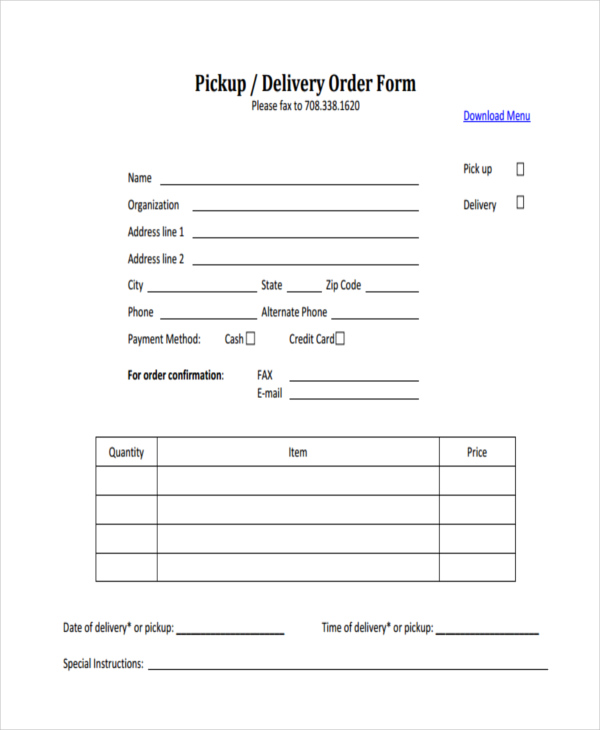 600×730 delivery order form samples ms word google docs from www.sampleforms.com
  701×717 curbside pickup order form template formsite from www.formsite.com
  768×1024 order form templates word excel from www.formsbirds.com
  600×730 sample delivery order forms ms word from www.sampletemplates.com